Christmas Dinner for Dogs: What's Safe to Share (And What to Keep Away)
Can dogs eat christmas dinner? Some of it, yes, but several Christmas classics are genuinely dangerous. Here's exactly what's safe to share and what to keep well out of reach.

Christmas dinner for dogs is a question I get asked every year, usually the week before the holiday, when someone's already planning what to sneak their dog under the table. And it's a fair question. Vets see a real spike in emergency calls every Christmas, not from accidents, but from well-meaning owners slipping their dog a bit of this, a spoonful of that, a corner of something from the table. A lot of the dangerous stuff looks completely harmless, which is exactly what makes it risky.
I want to give you a clear, honest answer here, not a vague "consult your vet before feeding anything" that doesn't actually help you when you're standing in the kitchen on Christmas Day with a dog staring up at you. Some of this you can absolutely share. Some of it you really can't. And a few things look so innocent they catch people completely off guard.
This post is all about Christmas dinner for dogs: what's safe to share, what's genuinely dangerous, and how to put together a plate your dog can actually enjoy without the risk.
Can Dogs Eat Christmas Dinner?
Yes, in part. The good news is that the core of a Christmas dinner, plain, unseasoned meat and veg, is actually fine for dogs. The problem isn't the turkey itself, it's everything that goes on and around it. Gravy, stuffing, seasoning, butter, salt: these are where Christmas dinner becomes a problem. Strip all of that away and what's left is genuinely fine.
The rule I come back to every year: if it's been cooked plain, it's probably okay. If it's had anything added to it, assume it's off limits until you've checked. It's rarely one obviously bad thing that causes problems. Usually it's a few small "just a taste" moments across the day adding up to more fat and salt than a dog's system is built to handle in one sitting.
What Can Dogs Eat from Christmas Dinner?
These are the Christmas dinner foods that are genuinely safe, as long as they're prepared simply, with no added salt, butter, oil, or seasoning.
Turkey (plain, cooked, boneless) is the safest thing on the Christmas table for dogs. Lean, cooked turkey meat is high in protein and low in fat. The catch: it has to be boneless and skinless. Cooked bones splinter and can cause serious internal damage, and the skin is too fatty and can trigger pancreatitis, even in dogs that seem fine on it. If your turkey's been brined or rubbed with salt before cooking, keep the portion small. The meat absorbs more sodium than you'd expect.
Carrots are one of the best vegetables you can give a dog, Christmas or any other day. Raw or cooked, they're safe, low calorie, and most dogs genuinely enjoy them. Skip the honey glaze.
Parsnips are fine in small amounts, cooked and plain.
Brussels sprouts are okay for dogs, though fair warning: they have the same gas-producing effect on dogs as they do on the rest of the family. Plain and cooked is fine; roasted in oil is not.
Plain boiled or mashed potato is safe in small amounts as long as there's no butter, salt, cream, or garlic involved. Roast potatoes are a different story: the fat content is too high, so keep those off the plate.
Turnip is safe in small amounts, plain.
Peas are fine, as long as they're not cooked with butter or sugar.
Green beans are safe, plain and unseasoned.
What Christmas Foods Are Dangerous for Dogs?
This is the part that matters most. Some of these are toxic in small amounts, not just "might cause an upset stomach" but genuinely dangerous, and worth knowing by name rather than relying on a gut feeling about what looks risky.
Stuffing almost always contains onion, garlic, or herbs from the allium family, all of which are toxic to dogs, whether homemade or shop-bought, a big helping or just a bite. Even small amounts can damage red blood cells and cause anemia over time. There's no version I'd call safe to share.
Gravy is too salty, too fatty, and typically made with stock and seasonings dogs can't handle. It's one of the biggest triggers vets see over Christmas for pancreatitis, which can turn serious fast. The smell makes it hard to keep dogs away from the table, but even a small amount poured over their usual food can cause real problems.
Onions and garlic are toxic to dogs in any form: raw, cooked, or powdered. They're in more dishes than you'd think, stuffing, gravy, roast vegetables, sauces. This is the one I'd be most careful about, since it hides in things that don't smell obviously "oniony" once cooked into a dish.
Roast potatoes aren't toxic, but the fat and oil used to roast them makes them a real risk, especially for dogs prone to stomach issues or pancreatitis.
Cooked bones, turkey legs, chicken wings, any cooked bone, splinter, and the splinters can puncture the digestive tract. It's one of the most common Christmas emergencies vets see, and an easy one to avoid by keeping carcasses well out of reach.
Pigs in blankets and sausages are too salty and fatty, and often contain garlic or onion powder.
Bread sauce, cranberry sauce, and chutneys are off limits too. They're high in sugar, often onion-based, and some cranberry sauces contain xylitol, which is highly toxic to dogs.
Can Dogs Eat Christmas Pudding, Mince Pies, or Fruit Cake?
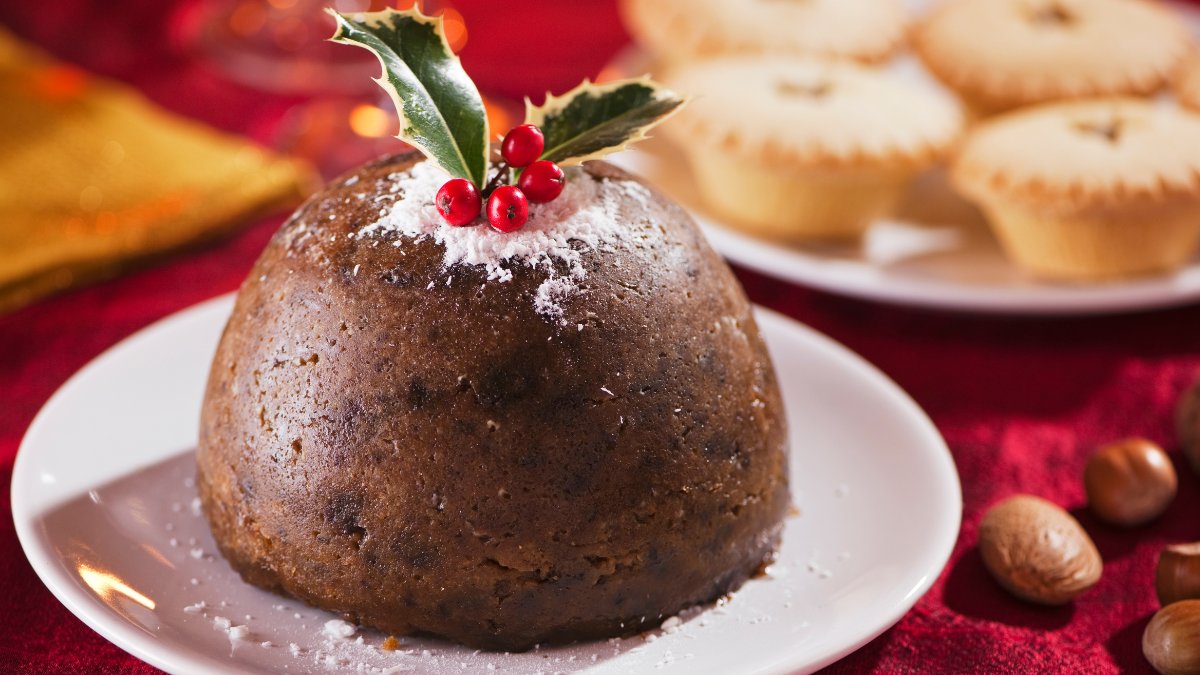
No. Full stop on this one. Grapes and raisins are highly toxic to dogs and can cause acute kidney failure, and Christmas pudding, mince pies, and fruit cake are full of them. There's no known safe amount, and the reaction can be severe. Keep all of these well out of reach, including any dried fruit that falls off the cutting board while you're baking.
Christmas pudding also often contains alcohol from brandy or rum, which dogs cannot safely process either. If your dog gets into any of these, contact your vet immediately rather than waiting to see what happens.
If you want to give your dog something to genuinely enjoy over the holidays instead of leftovers off the table, our guide to Christmas treats for dogs has safe homemade recipes and store-bought picks made specifically for them.
How to Make a Dog-Friendly Christmas Dinner Plate
The easiest way to handle this is to set aside a small portion of things before they get seasoned or combined with anything else. Before the turkey goes in the roasting tin with the herbs and butter, pull off a few slices of breast meat and set them aside to cook plain. Before the vegetables go in the steamer with salt, keep back a handful of carrots and green beans.
A dog Christmas plate might look like:
- A few slices of plain cooked turkey
- A handful of boiled carrots and green beans
- A small amount of plain mashed potato (no butter, no salt)
- Maybe a couple of plain cooked parsnips
That's a genuinely good plate of food for a dog. It's basically what I'd give mine, and she is extremely pleased about it every single year.
The trap people fall into is giving dogs "a bit of everything" from their own plate: stuffing, gravy, roast potatoes, and seasoned meat all mixed together. That combination, more than any single ingredient, is the one that ends Christmas Day at the emergency vet. Portion matters too. Even safe foods in a large quantity can upset a dog's stomach when it's not what they normally eat, so treat this as an extra, not a second dinner. Older dogs, smaller breeds, and anything with a history of pancreatitis should get an even smaller plate.
A Few Things to Watch Out For
Beyond the food itself, Christmas creates a few extra hazards worth watching. Leftovers on the counter are a real risk since dogs will find the turkey carcass if you leave the kitchen for even a few minutes. Secure trash bags full of scraps, bones, and foil too.
If you're having guests, make it clear that table scraps are off limits. The well-meaning relative who "just wants to give the dog something nice" is where a lot of these Christmas emergencies start.
If your dog does eat something they shouldn't, raisins, onion, garlic, cooked bones, or a large amount of fat, call your vet rather than waiting to see what happens. The quicker you act, the better the outcome.
Frequently Asked Questions
Can dogs eat turkey at Christmas? Yes. Plain, cooked, boneless turkey breast is safe and a good source of protein. Avoid the skin, cooked bones, and any turkey cooked with herbs, garlic, or butter.
Can dogs eat roast potatoes? Not ideally. They're not toxic, but the fat and oil used to roast them can upset your dog's stomach and trigger pancreatitis in dogs that are prone to it. Boiled or plain mashed potato is a much safer option.
Can dogs eat Christmas pudding or mince pies? No. Both contain raisins and dried fruit, which are toxic to dogs and can cause kidney failure. Keep these completely out of reach.
Can dogs eat stuffing? No. Stuffing almost always contains onion or garlic, both of which are toxic to dogs. Don't share any stuffing regardless of whether it's homemade or shop-bought.
Can dogs eat gravy? No. Gravy is too salty and fatty for dogs, and usually contains onion or garlic in the stock. It's one of the most common triggers for digestive upset and pancreatitis over Christmas.
What's the safest Christmas food for dogs? Plain, cooked turkey breast, along with plain cooked carrots, green beans, and small amounts of boiled potato. The key word throughout is plain: no seasoning, no added fat, no salt.
Make This Christmas One They'll Remember
Dogs have a way of making Christmas feel even more complete. The one who's always underfoot in the kitchen, staring hopefully at the table, convinced this is finally the year someone gives them the whole turkey.
With PawPaw, you can capture exactly those moments: your dog's reaction to the smell of Christmas dinner, the barely-contained excitement, all of it, and turn them into something you'll actually want to watch back. Because the best part of Christmas isn't always what's on the table.
Join the waitlist and be the first to try it. 🐾