How to Comfort a Dog Scared of Fireworks: 7 Tips That Actually Work
If your dog shakes, hides, or panics at fireworks, you are not alone. Here is how to comfort a dog scared of fireworks - from safe spaces to vet-approved options.

Every year, fireworks season arrives and dog owners everywhere find themselves watching their dog fall apart. If your dog is scared of fireworks, you'll know the signs already - the shaking, the panting, the frantic search for somewhere to hide. Fireworks anxiety in dogs is one of the most common behavior problems owners face, and it's also one of the most distressing to watch, because every instinct tells you to fix it and nothing you try seems to work.
Over the years working with noise-phobic dogs, I've found that most owners aren't lacking effort - they're lacking the right information. Some of the most commonly repeated advice out there is either outdated or, worse, actively counterproductive.
This post is all about how to comfort a dog scared of fireworks so that you can help them feel safe.
Here are seven things that genuinely help, in order of what I'd try first.
Why Are Dogs Scared of Fireworks?
Before diving into the tips, it's worth understanding what's actually happening when a dog panics at fireworks - because it changes how you respond.
Dogs hear roughly four times further than we do, and they pick up frequencies we can't detect at all. A firework that sounds loud to you is overwhelming to them. Add to that the unpredictable timing, the physical vibration, and the flashing light, and you've got a genuinely threatening sensory experience.
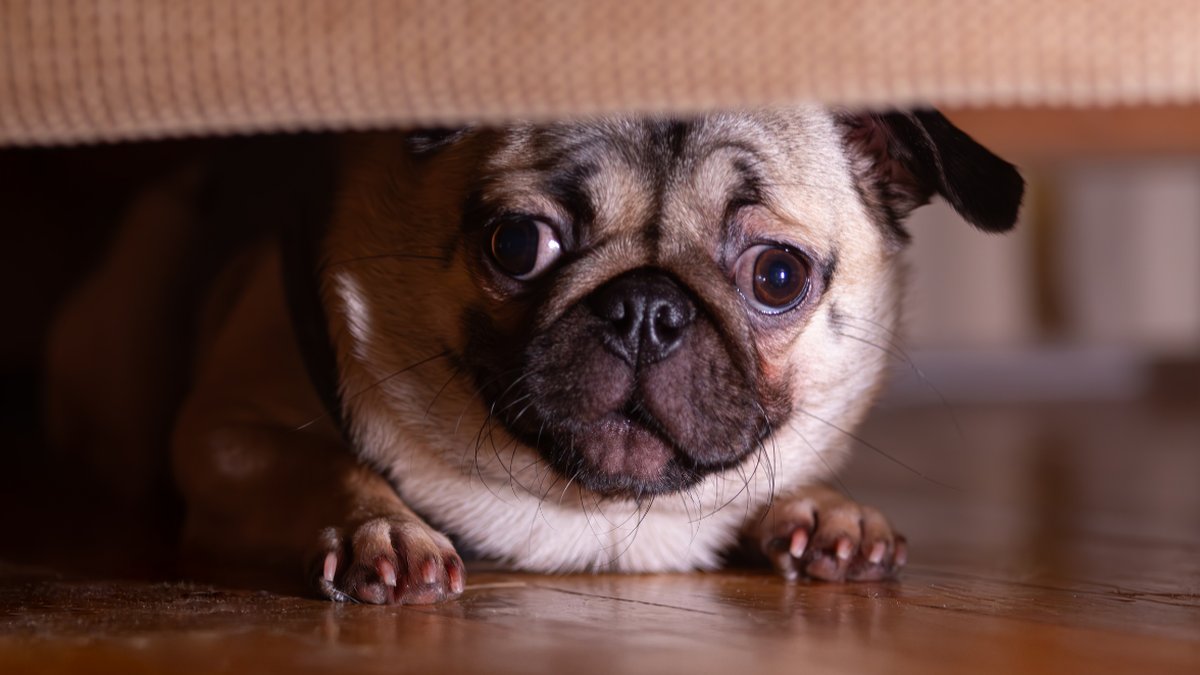
Dogs don't do drama. A dog trembling behind the sofa isn't being soft or attention-seeking - they genuinely believe something dangerous is happening. Their hearing picks up things ours can't, and the unpredictability is particularly hard for them; dogs are pattern-seekers, and fireworks follow no pattern at all. Once you understand that, your whole approach shifts. You stop trying to make them "get over it" and start trying to make them feel safe.
Signs Your Dog Is Scared of Fireworks
Some dogs are obvious about it - shaking, howling, bolting for cover. Others show subtler signs that are easy to miss.
Panting when they're not hot. Yawning repeatedly. Pacing without settling. Drooling more than usual. Ears pinned back. Trying to press against you, or doing the opposite and hiding where you can't reach them. Some dogs go off their food. Some try to escape the yard.
Picking up on the subtler signs is a skill in itself - our body language guide is a good place to start if you're not quite sure what you're seeing.
7 Tips to Comfort a Dog Scared of Fireworks
1. Build them a safe den before the fireworks start
This is the single most effective thing you can do, and it has to happen before the night kicks off, not during it.
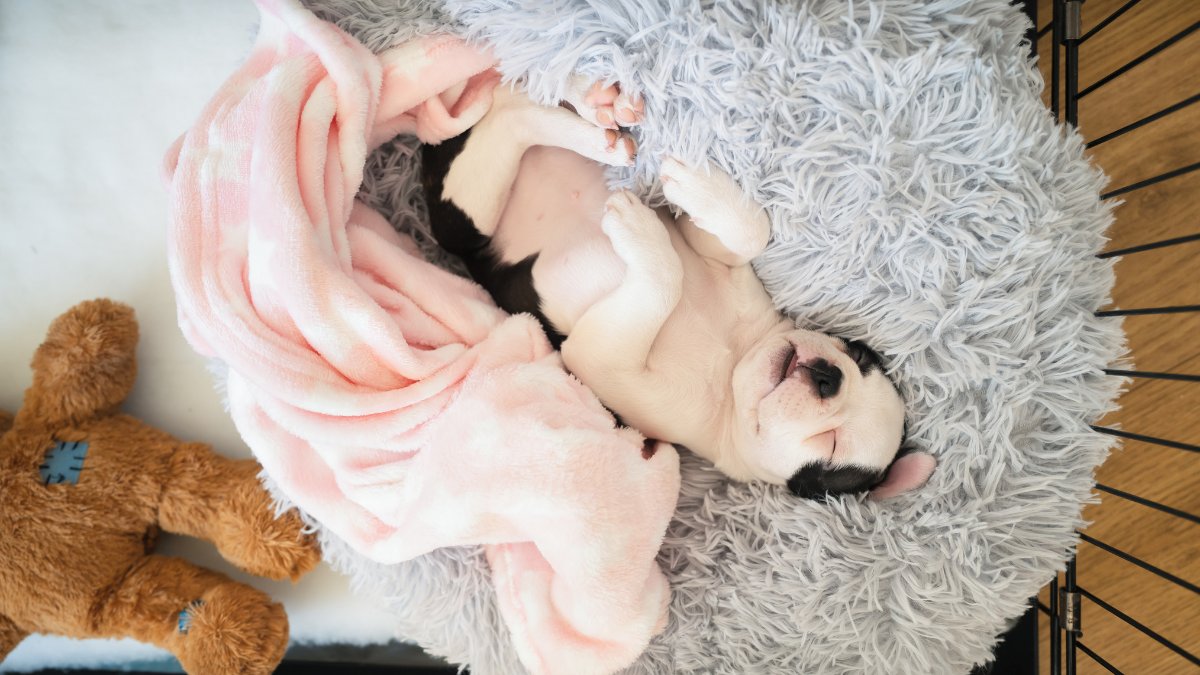
A safe den gives your dog somewhere that feels enclosed, secure, and theirs. For some dogs that's a crate with a blanket thrown over it. For others it's under a bed, in a closet, or in the most interior room of the house. The key is that they choose it, not you.
Set it up a few days before any planned fireworks event. Put their bed or a worn item of your clothing in there. Feed them in or near the space so they associate it with good things. Leave it accessible all the time so they can go in and out freely - making it a confinement spot on the night undermines the whole point.
On the night itself, leave a stuffed Kong or a long-lasting chew in there with them. A dog who's busy with something good barely has room to panic.
2. Muffle the sound and block out the flashes
It's not just the bangs, it's the flashes of light too. Both contribute to the fear response, so tackle both.
Close all windows and doors, and draw curtains or blinds in every room your dog has access to. Move to an interior room if you can, since rooms with fewer external walls absorb sound better. Then add a layer of background noise: TV, music, a fan, or a white noise machine all work. The goal isn't to completely drown out the fireworks (impossible), but to muffle the sudden peaks that cause the startle response.
Through Dog's Ears, iCalmPet, and similar products offer music specifically designed around canine hearing - lower frequencies, slower tempos. They won't work for every dog, but for dogs with mild-to-moderate anxiety, a lot of owners find they make a real difference.
Tire your dog out earlier in the day with a longer walk or a solid training session. A dog who's had proper physical and mental exercise before fireworks start is noticeably calmer than one who's been cooped up all day. Just make sure you're done with outdoor time before it gets dark.
3. Don't reinforce the panic, but do reassure them
This one trips people up constantly, and it's largely based on outdated thinking.
The old advice was: ignore your scared dog so you don't "reward" the fear. This has been largely rejected by modern behaviorists. Comfort doesn't cause fear, it helps regulate it. You can't make your dog more scared by reassuring them, any more than comforting a frightened child makes them more fearful.
That said, how you reassure matters. Stay calm yourself. Dogs read our emotional state remarkably well, and if you're hovering anxiously over them whispering "oh you poor thing, is it scary?", your energy is confirming that yes, something bad is happening. Sit near them, speak in a low normal voice, offer a gentle stroke if they want it, and then carry on as normal. Act like fireworks are completely unremarkable.
The distinction is this: calm, present reassurance is helpful. Anxious fussing is not.
4. Try a calming wrap
Anxiety wraps, the most well-known being the ThunderShirt, work on the principle of gentle, sustained pressure. Think of it like swaddling: that constant light compression has a calming effect on the nervous system for many dogs.
Do they work for every dog? No. But they work for enough dogs that they're worth a shot, and they're completely harmless either way. One thing worth knowing: put it on before the fireworks start, and try it a few times on normal days first. A dog who only ever wears the wrap during terrifying events will start to dread the wrap itself.
If your dog hates wearing anything, freezes up, or wriggles out of everything, it probably isn't the right fit. Some dogs genuinely tolerate wraps well; others don't.
5. Use pheromone products and calming supplements
Adaptil is a synthetic version of the pheromone a mother dog naturally produces to calm her puppies. It comes as a plug-in diffuser, a collar, and a spray. The diffuser is the most practical option for fireworks - plug it in near your dog's safe space 24 to 48 hours before the event, so it's already had time to build up in the room.
Adaptil isn't sedating. It just takes the edge off mild-to-moderate anxiety. It won't touch severe phobia on its own, but as part of a broader calming strategy it's a useful tool.
For supplements, look for products containing L-theanine (an amino acid found naturally in green tea) or alpha-casozepine (a milk protein derivative). Both have evidence behind them for canine anxiety. Zylkene is a well-regarded alpha-casozepine product; brands like VetriScience, Composure, and NaturVet make L-theanine chews. Start a few days before the event rather than giving them cold on the night.
Avoid any over-the-counter product containing Benadryl (diphenhydramine). It doesn't reliably sedate dogs, and in some dogs it actually causes agitation. Same goes for human CBD products, where dosing, purity, and THC content vary wildly. If you want to try CBD, use a product specifically formulated for dogs from a reputable brand.
6. Start desensitization training before fireworks season
If you want to genuinely change how your dog feels about fireworks, not just manage them through each event, desensitization is the long game. And it works.
Find a fireworks recording on YouTube or Spotify - there are playlists made specifically for this. Play it during dinner at the lowest volume possible. So quiet you have to strain to hear it yourself. Your dog eats, the recording plays, nothing bad happens. Same again tomorrow, maybe the tiniest bit louder. Over weeks and months of this, something shifts. The bang stops being a warning sign and starts being background noise, sometimes even a cue that something good is coming.
Any sign of stress at all means you've gone too loud too fast. Drop back down. The whole point is that your dog never reaches the threshold where the fear kicks in.
This takes weeks, ideally months. It's not a two-day fix, and it won't help if you start the night before New Year's Eve. But done correctly, over a full season, many dogs go from barely functional to genuinely calm. It's the closest thing to a permanent solution that doesn't involve medication. Consistent positive reinforcement training is the foundation for all of it.
7. Talk to your vet if nothing else is working
If your dog's fireworks fear is severe, and by that I mean hours of shaking and panting, attempts to escape, an inability to eat or settle at all, please don't white-knuckle it through every fireworks season with supplements and white noise alone. That level of fear is genuinely distressing for a dog, and there are medications that work well.
Trazodone and gabapentin are two of the most commonly prescribed options. Sileo (dexmedetomidine oromucosal gel) is specifically licensed for noise aversion in dogs in several countries, and many owners find it highly effective - it takes the edge off without fully sedating the dog. For dogs with year-round anxiety, longer-term options like fluoxetine may also be worth discussing.
Contact your vet well in advance of any known fireworks dates. Many practices get very busy with these requests close to events, and some medications benefit from a trial run in calm conditions before the real thing. Don't leave it until the week before.
A Quick Note on Safety
Whatever else you do, make sure your dog's ID and microchip details are current before fireworks season. More dogs go missing during fireworks events than almost any other time of year, and an uncharacteristically frightened dog can bolt from a yard they've never escaped before. Keep them on a leash even in enclosed spaces, and double-check gates and fencing during firework periods.
To Sum Up
Fireworks aren't going anywhere. But with the right preparation, most dogs can get through them without it being the ordeal it might be right now. Start with the safe den, add the sound and light management, and if you have time before the next event, begin the desensitization work. If your dog's fear is severe, talk to your vet sooner rather than later.
The dogs I've seen make the biggest turnarounds are the ones whose owners started early and stayed consistent. It's rarely one single fix. It's a handful of small things stacked together.
Want to Understand Your Dog Even Better?
Your dog communicates through behavior, body language, and habits - and fear is one of the clearest signals they send.
With PawPaw, you can upload a video of your dog and discover what their behavior might be telling you. The app turns everyday dog moments into fun talking-dog videos while helping you understand your dog better.
Because when you understand your dog, your bond becomes even stronger. 🐾
This article is part of our dog behavior guide.