How to Train a Dog at Home: A Beginner's Complete Guide
You don't need a professional trainer to teach your dog the basics. Here's how to train a dog at home using positive reinforcement - commands, session length, socialization and more.

The first time I asked our dog Shea to sit, she sniffed my hand, wandered off, and sat down about two feet to the left - entirely of her own choosing. Not what I was going for. But watching her figure it out over the following weeks, treat by treat, was one of those things that quietly changes how you think about dogs. She wasn't being stubborn. She just genuinely didn't know what I wanted yet. Once she did, she'd sit before I even finished saying the word.
The good news is you don't need a professional trainer, a fancy facility, or a particularly patient personality to get this right. You need consistency, a handful of treats, and about five minutes a day. This guide walks through everything - the commands, the method, how long to practice, and the common mistakes that slow most people down.
This is the beginner's complete guide to how to train a dog at home.
Can You Train Your Dog at Home Yourself?
Yes - and for most dogs and most basic skills, home training works just as well as a class. Obedience schools have their place (more on that later), but the core of dog training is repetition and reward, and those don't require a professional to deliver. What they do require is you being consistent - same words, same timing, same rules - because dogs learn through patterns, not explanations.
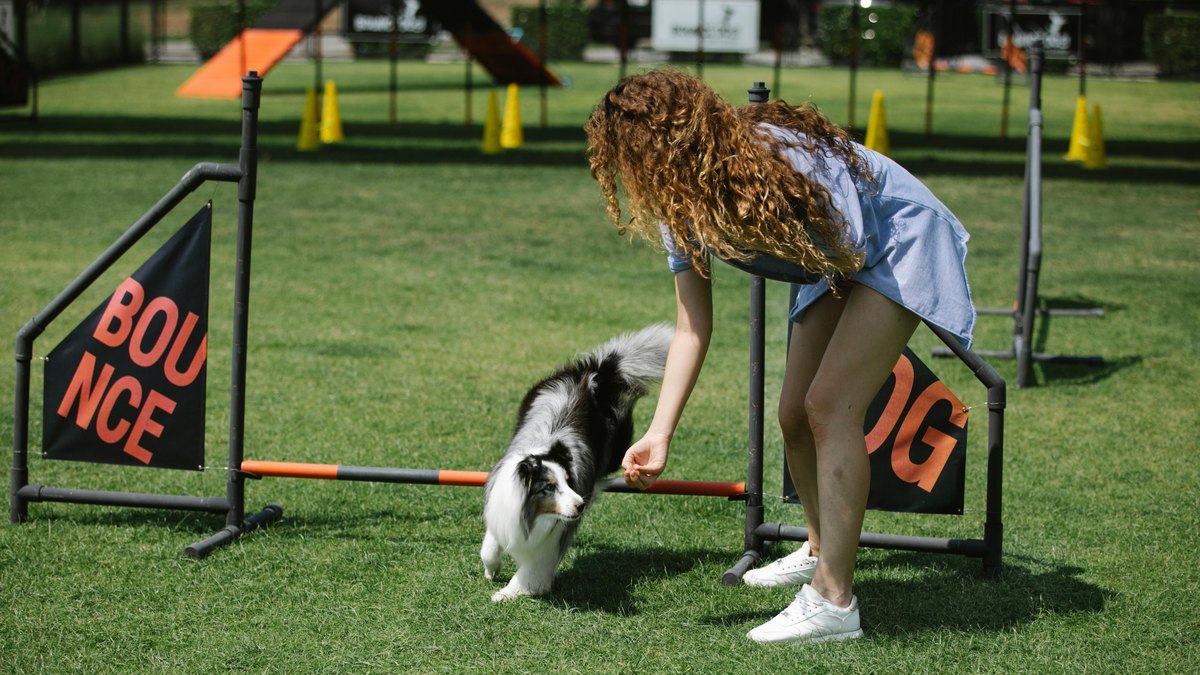
The one thing classes give you that's harder to replicate at home is distraction practice. A trained dog in your living room is not the same as a trained dog at the park with squirrels. Once your dog knows a command reliably at home, gradually practicing it in more distracting environments is a worthwhile next step.
What Age Should You Start Training a Dog?
Earlier than most people think. Puppies can start absorbing simple commands from around 8 weeks old - which is typically right around when they come home. Their attention spans are short and their bladders are unreliable, but their brains are already wiring fast. Brief, gentle sessions at this age aren't too much; they're actually ideal.
That said, if you've adopted an older dog, don't assume the window has closed. Adult and senior dogs learn new things all the time - they often have longer attention spans than puppies and may actually be easier to train in some respects. Patience looks a little different, but the method is the same.
The 5 Basic Dog Training Commands Every Dog Should Know
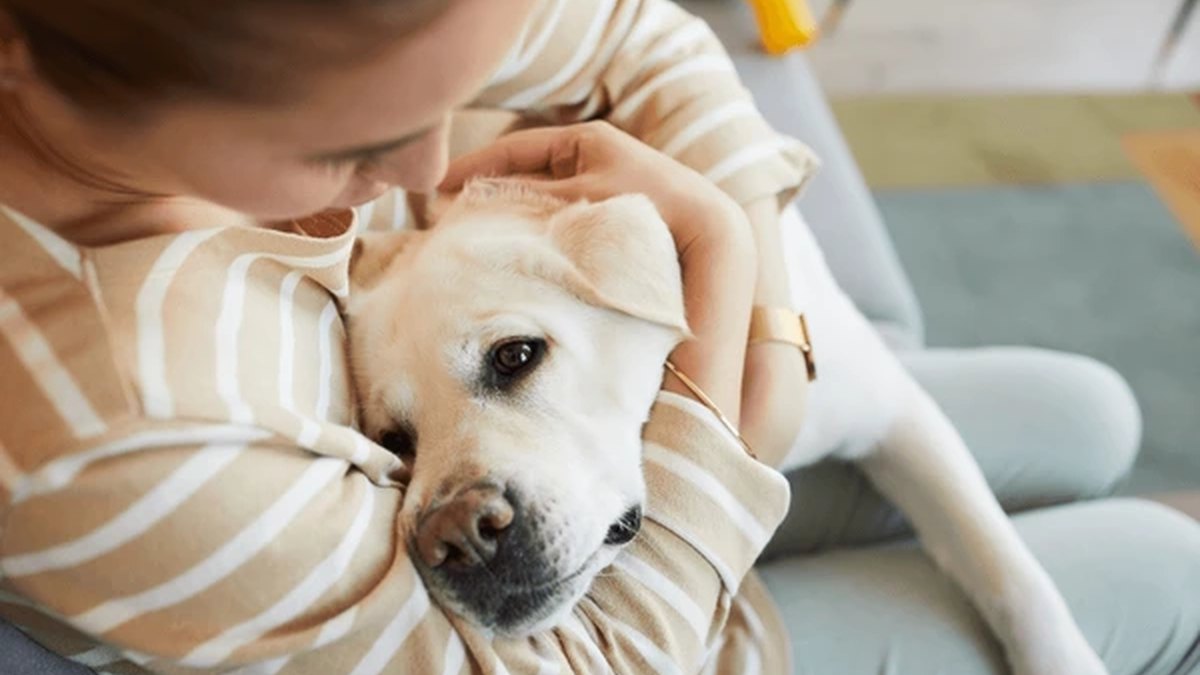
Five commands cover the vast majority of everyday situations. Master these and life with your dog gets noticeably easier.
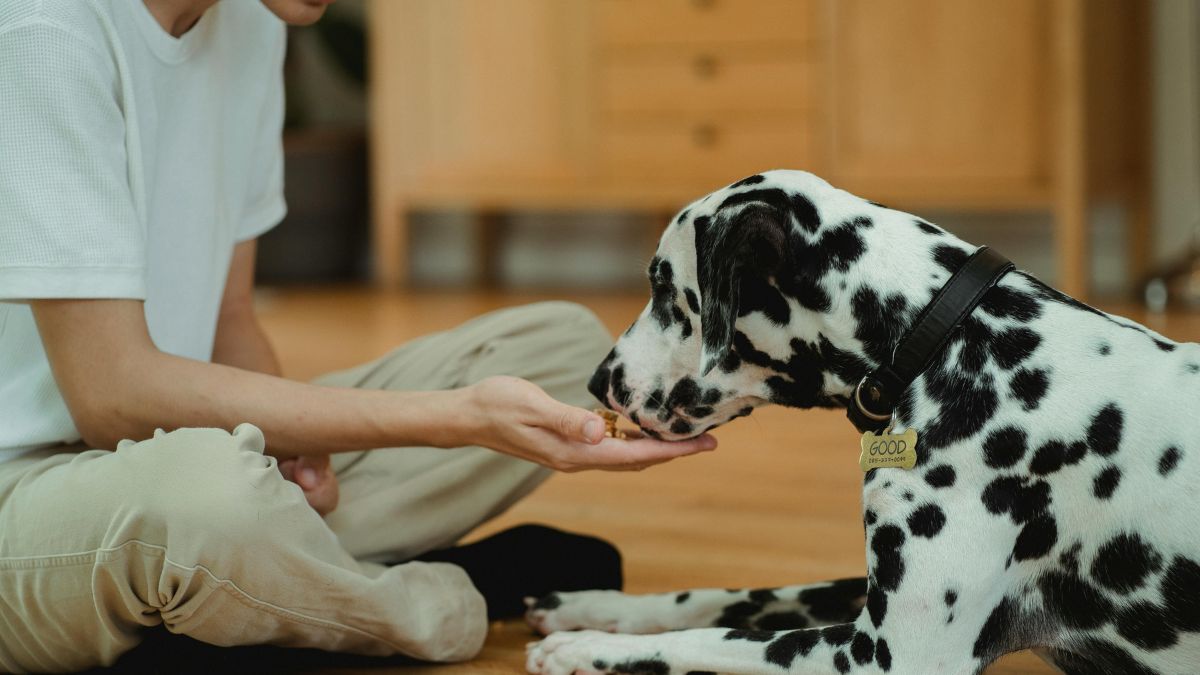
Sit is almost always the first one to teach, and for good reason - it's easy to prompt, easy to reward, and immediately useful. An excited dog that knows "sit" can be asked to calm down before greeting people, before eating, before crossing the road. Start with a treat held just above your dog's nose and slowly moved back over their head; as their nose follows the treat, their bottom naturally goes down.
Stay is where patience starts to pay off. Once your dog can sit reliably, ask them to hold it - step back one pace, reward if they don't move, then gradually increase the distance and duration. A solid "stay" is one of the most genuinely useful things a dog can know, and one of the most underrated by new owners.
Come - or recall - is arguably the most important command on this list from a safety perspective. A dog that comes reliably when called can be given more freedom; a dog that doesn't gets kept on a leash out of necessity. Make "come" the happiest word in your dog's vocabulary: when they reach you, the reward should be enthusiastic every single time, even if they took a while.
Leave it is the one that prevents the most disasters on walks. Teach it by placing a treat on the floor, covering it with your hand, and rewarding your dog the moment they stop trying to get it and look at you instead. Graduating to dropped food, dead birds, and interesting rubbish on the pavement takes time, but the foundation is the same.
Down takes a little longer than sit for most dogs because lying flat is a more vulnerable position - some dogs resist it instinctively. Go slowly, lure them down with a treat from the sit position, and don't push on their back to force it. Patience here gets you further than pressure.
What's the Best Method for Training a Dog?
Positive reinforcement - rewarding the behavior you want - is the most effective training method going, and it's the one with the most scientific backing behind it. The basic idea is simple: when your dog does something right, something good happens immediately. Treats are the classic reward, but praise, a quick game with a toy, or even just your excited reaction can all work depending on what your dog finds motivating.
Timing matters more than most people realize. The reward needs to come within a couple of seconds of the behavior, or the connection blurs. If your dog sits, then sniffs the ground, then you give the treat - you've rewarded the sniffing, not the sitting. This is why some trainers use a clicker or a sharp verbal marker like "yes!" to mark the exact moment, with the treat following a beat later.
What doesn't work - and is increasingly recognized as actively harmful to the relationship - is punishment-based training. Shouting, leash corrections, and physical pressure can suppress behavior in the short term but tend to create anxiety and erode trust. The dogs I've seen respond best to their owners are almost always the ones trained with patience and reward.
How Long Should Dog Training Sessions Be?
Shorter than you think. Five to ten minutes per session, two or three times a day, consistently beats hour-long weekend marathon sessions by a wide margin. Dogs - especially puppies - hit a concentration wall quickly, and once they're over-stimulated or tired, learning drops to almost nothing.
One thing that made a real difference for us: if a session starts going sideways - Shea losing interest, getting it wrong repeatedly - we'd just drop back to something she already knew, nail it once, and stop there. Not giving up, just not finishing on a low. Dogs seem to carry the last moment of a session into the next one, so it's worth making sure that moment was a good one.
Dog Socialization: The Part People Often Skip
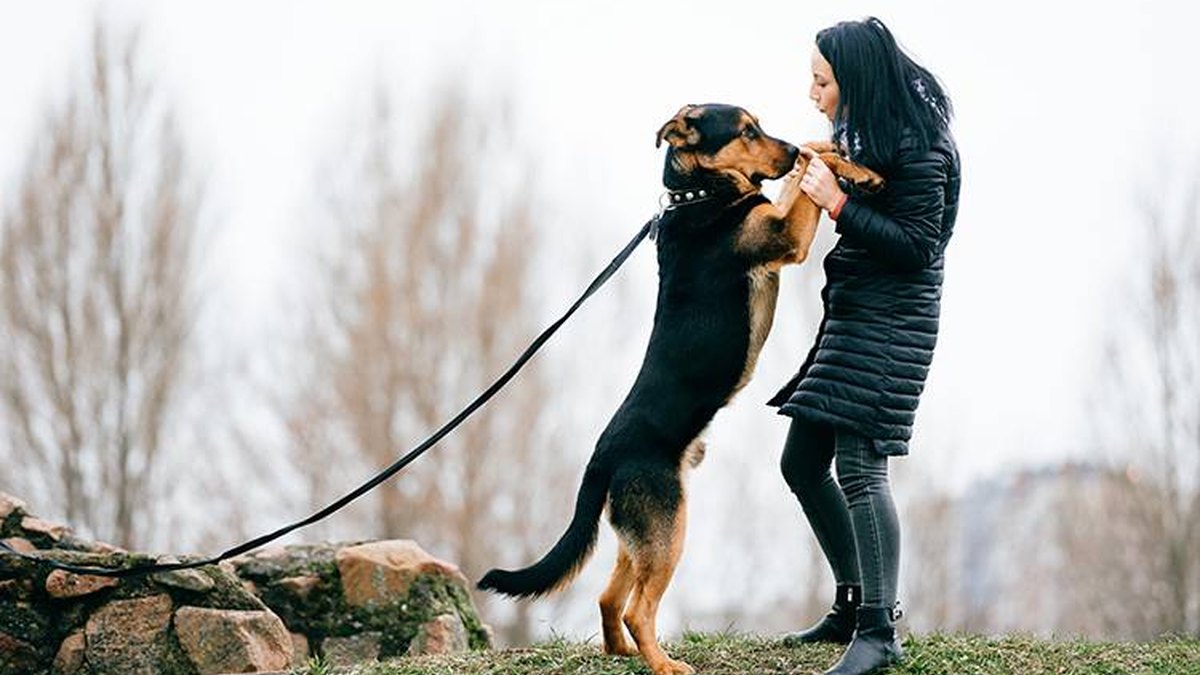
Socialization isn't a command you teach - it's exposure you provide. A well-socialized dog has encountered enough different people, animals, sounds, and environments during their early months that novelty doesn't panic them. A poorly socialized dog finds the world overwhelming, which tends to show up as fearfulness, reactivity, or excessive barking at anything unfamiliar.
The critical window for socialization is roughly 3 to 14 weeks of age, so if you have a puppy, this is the time to gently introduce them to as much variety as possible - different people, children, other calm dogs, traffic sounds, slippery floors, bicycles, umbrellas. Positive experiences during this window shape how a dog reads the world for the rest of their life.
That doesn't mean adult dogs can't be desensitized to things that worry them - they can, it just takes more patience and more careful management. If you have a reactive or anxious adult dog, working with a positive-reinforcement trainer is usually the most effective route.
Common Dog Training Challenges - and What's Usually Behind Them
Most training problems aren't bad behavior - they're communication gaps, unmet needs, or inadvertent reinforcement of exactly what you're trying to stop.
Pulling on the leash is one of the most common, and the cause is simply that it works - the dog pulls, they get to the thing they want to sniff, so pulling gets reinforced. The fix is to stop moving the moment the leash goes taut and only walk forward again on a loose leash. It takes time and it's boring, but it works.
Jumping up on people usually starts as puppies being rewarded for it - because puppies jumping up is cute and everyone pets them. The problem is the dog doesn't understand why it became wrong when they grew up. Consistent ignoring (no eye contact, no touch, no speech) when all four paws aren't on the ground, and enthusiastic attention when they are, is the cleanest fix.
Ignoring commands in exciting environments is almost always a proofing problem rather than a defiance problem. If your dog knows "come" in the kitchen but not at the dog park, they haven't fully learned "come" - they've learned "come, when there's nothing more interesting happening." That's normal, and the answer is gradually practicing in more distracting settings, not repeating the command louder.
Excessive barking deserves its own conversation because the cause varies widely - boredom, anxiety, territorial behavior, learned attention-seeking. Figuring out what's driving it is more useful than trying to suppress it without understanding it.
When Is It Worth Getting a Professional Dog Trainer?
For basic obedience, you probably don't need one. For anything involving fear, aggression, significant anxiety, or reactivity, a professional - specifically one who uses force-free, positive-reinforcement methods - is genuinely worth it. These are situations where getting the approach wrong can make things worse, and having an experienced eye on what's actually happening makes a real difference.
Puppy socialization classes are also a good idea even for owners planning to do most training themselves. They provide a safe, supervised environment for early social exposure and usually come with good guidance on the basics.
Training and Reading Your Dog Go Together
The more fluent you become in your dog's body language, the better your training sessions will go. A dog that's tense, over-stimulated, or worried isn't in the right headspace to learn - and being able to spot those signals means you can adjust before frustration sets in on either side. If you'd like to get better at reading those cues, our guide on how to read a dog's body language is a natural companion to this one.
Understand Your Dog Better with PawPaw
Training opens up a conversation with your dog - and PawPaw takes it further. Upload a video of your dog and get a sense of what their behavior might be telling you. The app turns everyday dog moments into fun talking-dog videos while helping you understand your companion a little better.
Because the more you understand your dog, the stronger your bond becomes. Join the waitlist and be first to try it. 🐾
This article is part of our dog behavior guide.