11 Signs Your Dog Is Bonded to You - And What They Mean
Wondering if your dog is truly bonded to you? Here are 11 signs to look for - from subtle body language to everyday behaviors that show real trust and attachment.

People ask me this one a lot: how do you actually know if your dog is bonded to you? Not just fond of you, not just tolerating you because you hold the treats - but genuinely, deeply attached.
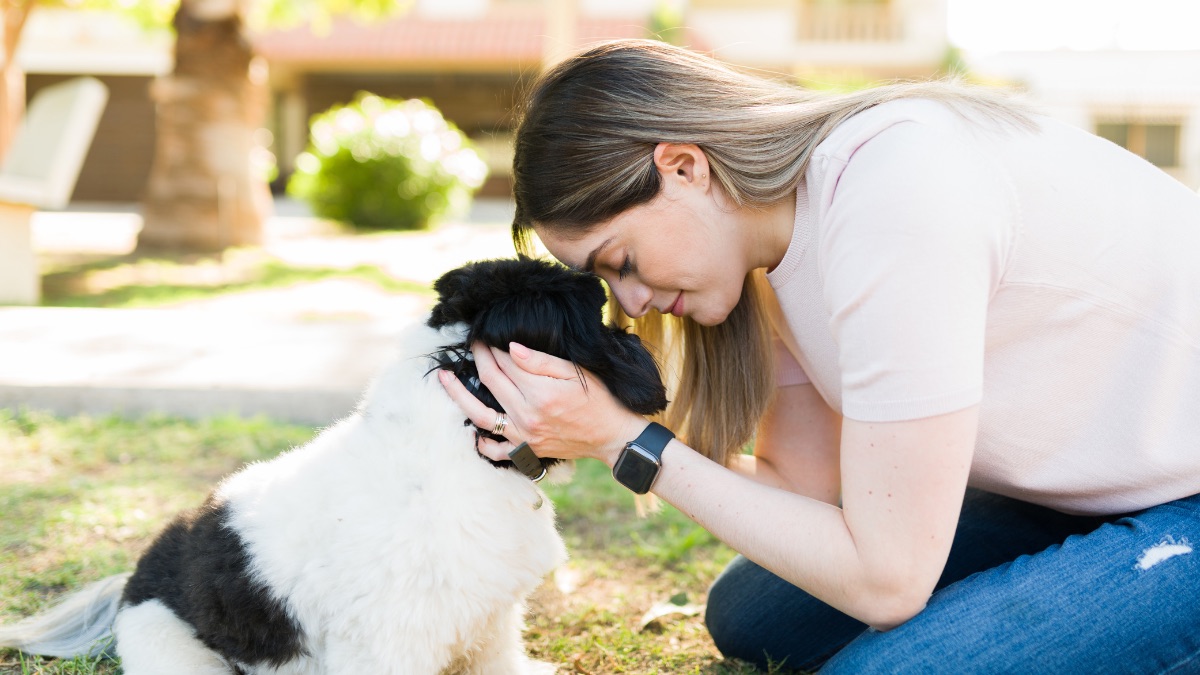
The honest answer is that they're showing you constantly. The problem is most of it is so undramatic that people miss it entirely. A dog that chooses to lie down touching your foot rather than on the other side of the room. The glance back at you mid-walk before running off again. These aren't accidents. They're just easy to explain away as nothing, because nothing is kind of what they look like from the outside.
This post is all about the signs your dog is bonded to you - what to look for, and what each behavior is actually telling you.
What Does It Mean for a Dog to Be Bonded to You?
Before we get into the signs, it helps to understand what bonding actually is. In behavioral terms, a bonded dog sees you as their secure base - the person they feel safe with, orient towards when things are uncertain, and seek out when they want comfort. It's not the same as imprinting (which happens in the first weeks of life) and it doesn't mean your dog is dependent on you to the point of anxiety. A well-bonded dog is calm, confident, and chooses to be near you.
The bond builds over time through consistent care, positive experiences, and - crucially - you actually paying attention to what your dog is communicating. Which brings us to the signs.
11 Signs Your Dog Is Bonded to You
1. They Make Soft Eye Contact with You
Shea used to do this thing where she'd just... look at me. Not at the treat pouch, not at the door - just at my face, for a second, then away. I didn't clock it for probably the first year. Then I read something about oxytocin and dogs, went back through some old photos, and there she is in half of them just - looking at me. She'd been doing it the whole time. I just wasn't paying attention.
The easy mistake is confusing this with challenge staring - the hard look a dog holds over a bone or a spot on the sofa. That version has weight to it. What I'm describing is lighter. Casual, almost. The glance. Nothing behind it except the fact that they wanted to look at your face for a second.
2. They Follow You from Room to Room
My partner has a joke about this. Apparently I can't go to the bathroom without an escort. What I can tell you is that for seven years, every time I stood up from the sofa, I could hear Shea getting up behind me. She didn't always follow all the way. Sometimes she'd just check where I was going, then lie back down. But she always checked.
I've had people tell me they stopped letting their dog follow them around because someone told them it was a sign of anxiety. And it can be - I won't say otherwise. But there's a version that's just dogs being social animals who'd rather be where you are. The tell is what happens when you actually leave. The anxious dog falls apart. This one just picks a spot and waits.
3. They Check In with You on Walks
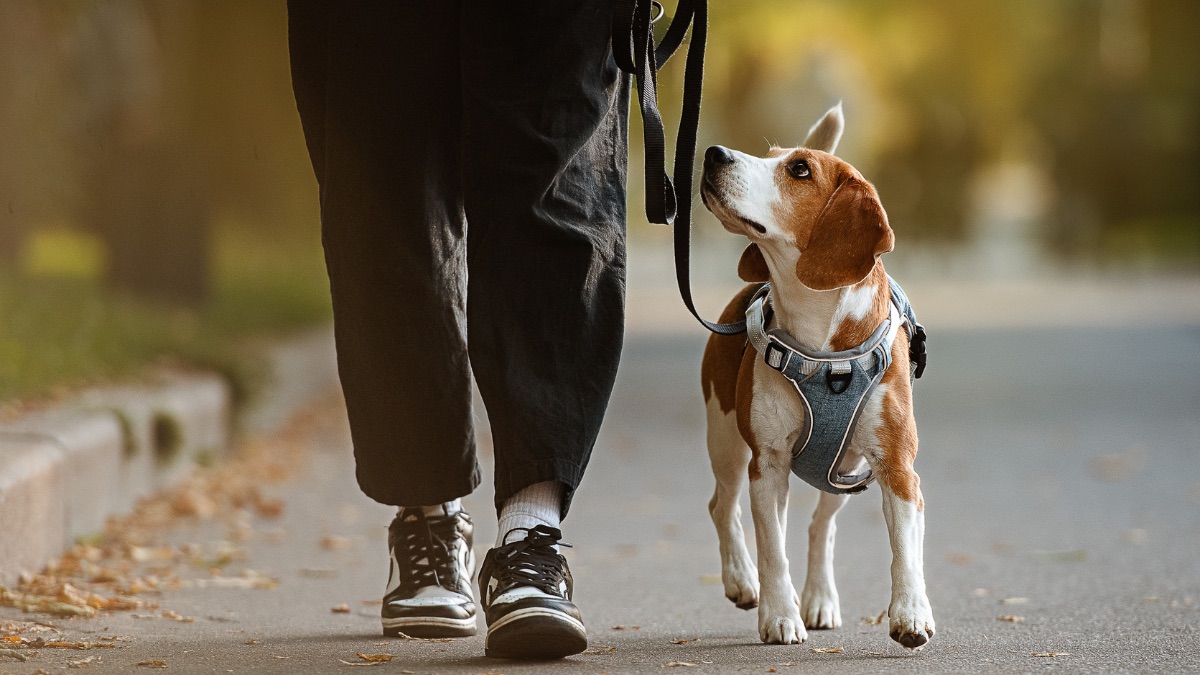
There's a field near us we go to most mornings. I was standing there one day - waiting for something, a text maybe, I can't remember - and Shea was way out ahead doing her thing. And then she just stopped and looked back. No reason. I assumed she'd heard something but there was nothing. She came back, sniffed around where I was standing, then headed off again. I've since asked other people if their dogs do this and apparently it's common enough that there's a name for it. At the time I just thought it was her being weird.
4. They Lean Against You
There's a dog at my training group - a Staffie called Dennis - who will press his entire body weight against your legs the moment you sit down anywhere near him. His owner calls it "the lean." Once you've felt it, it's hard to explain what it communicates, but it's something in the vicinity of: I trust you enough to physically depend on you right now. Some breeds do this more than others (Staffies, Mastiffs, Great Danes), but it's not exclusive to them. Any dog that leans into you when they don't have to is showing that your being there makes them feel steadier.
5. They Bring You Their Toys
Not always asking to play - sometimes just bringing you a toy to show you, dropping it at your feet, then wandering off. This one confuses people but it's a lovely sign. Dogs bring valued objects to the people they trust. It's a sharing behavior. When Shea used to bring me a tennis ball the moment I got home and just drop it and walk away, it took me a while to realize she wasn't asking for anything. She was just - offering something she loved to someone she loved.
6. They Sleep Near You (or on You)
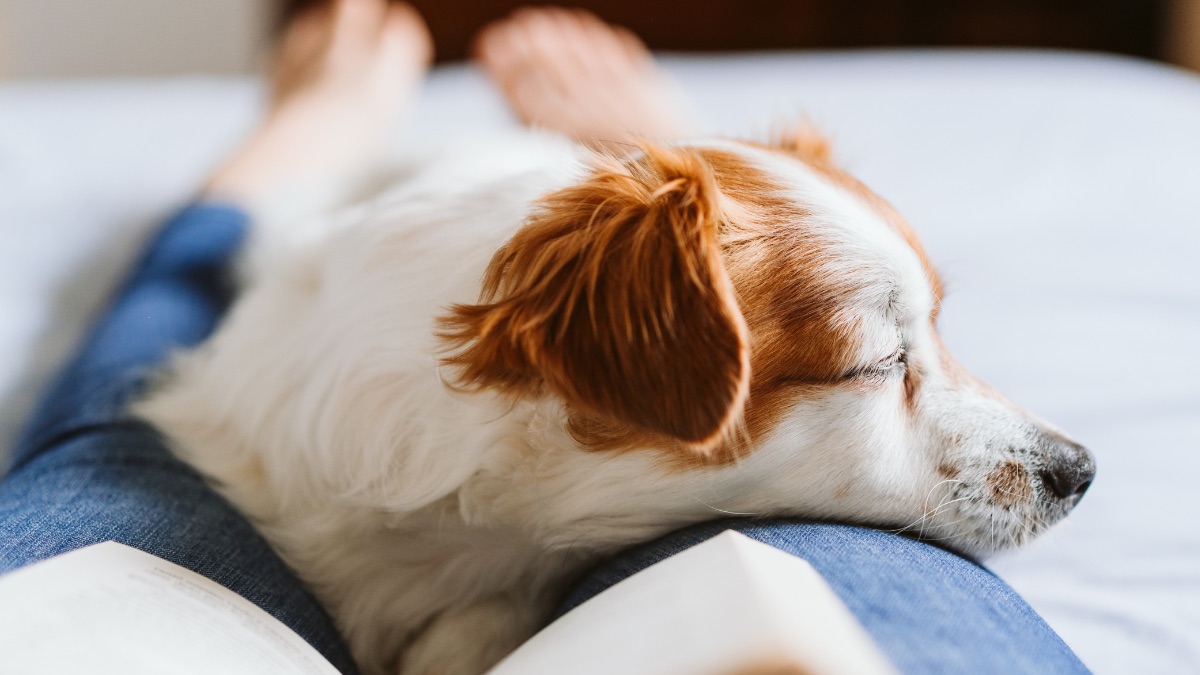
Think about what sleep requires from a dog. They're completely unguarded. They can't react to anything. A dog that chooses to sleep pressed against you - or draped across you, or just reliably on your side of the bed - has decided, on some level, that this is the safest place to be that vulnerable. Shea used to sleep with her back against my legs every night. I used to lie there not wanting to move in case I disturbed her. Which probably says something about the bond going both ways.
7. They Yawn When You Yawn
Okay, bear with me on this one. Catching someone else's yawn - the contagious kind - turns out to be linked to empathy. And there are studies showing dogs do it more with their owners than with strangers. Nobody's entirely sure why, but the leading theory is that it's a social mirroring thing, the same reason humans do it with people they feel close to. Try yawning exaggeratedly in front of your dog and see what happens. It won't work every time, but when it does, it's a little weird and kind of lovely.
8. They Show You Their Belly
Shea used to do this in the kitchen - she'd just flop onto her back on the tiles right in front of the fridge and look at me upside down. Completely sprawled. Feet in the air. It's hard to describe what it feels like when a dog trusts you enough to just... do that. Not every belly-up means the same thing - the appeasement roll looks tenser, more deliberate. What I'm talking about is the other one. The sigh-and-sprawl. Pure comfort.
9. They Stay Calm When You Handle Them
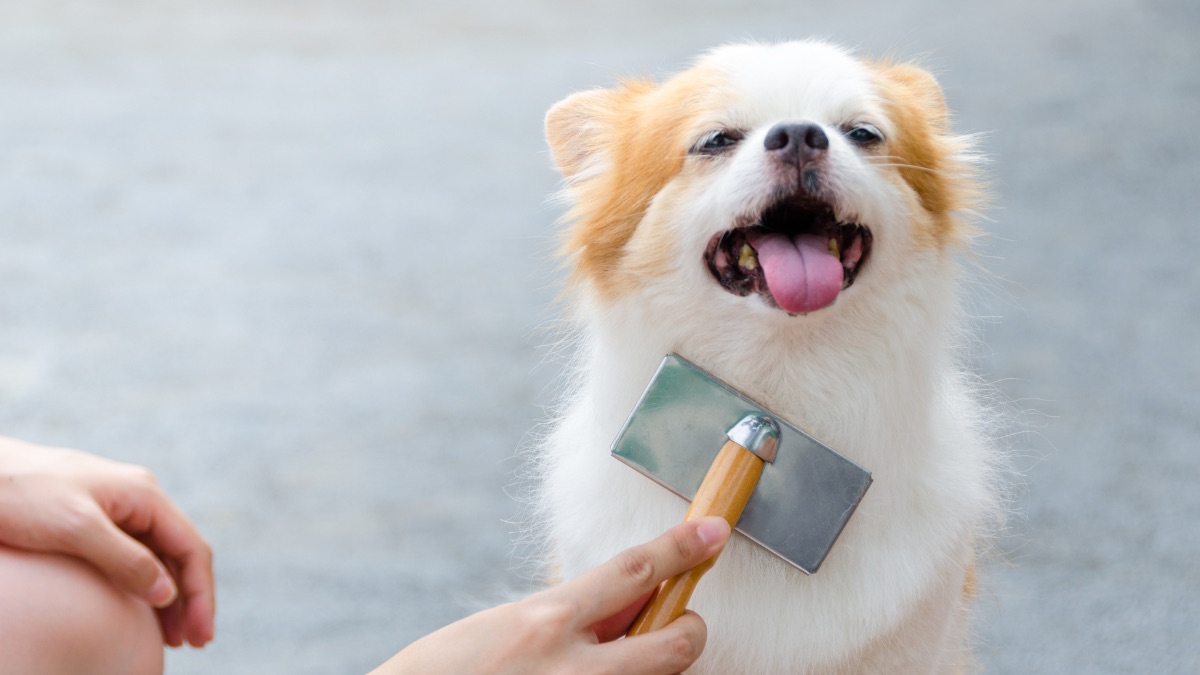
A dog that lets you examine their ears, check their paws, trim their nails, or brush their coat without a fuss isn't just well-trained - they trust you. These are all things that make a dog physically vulnerable. Tolerating them calmly, even leaning into the process, means they've decided you're safe to let in. If you have a dog that goes tense during grooming with a stranger but melts for you, that difference is the bond in action. Our guide on how to groom a dog at home goes into this dynamic more.
10. They Get Excited When You Come Home - and Calm Down Quickly
Every dog gets excited when you come home - that part tells you nothing. What I look at is what happens in the twenty minutes after. I had a dog before Shea who could never quite settle when I came in. She'd follow me around the flat, lie down, get up again, couldn't find a position. I thought it was just personality. It wasn't really - it was a dog who'd been wound up by the absence rather than relieved by the return. Shea would do her greeting thing - usually involving a sock she'd pulled from somewhere - and then go straight back to her bed. That difference is the one that matters.
11. They Mirror Your Energy
The worst day I had last year, I came in and didn't turn the lights on. Just sat down on the kitchen floor - I don't know why the floor - and Shea came and put her chin on my knee and stayed there. Didn't want anything. Just stayed. My partner came in twenty minutes later and asked what was wrong. Shea had known before I'd taken my coat off.
Dogs pick up on things we're not consciously broadcasting. Cortisol apparently has a detectable smell. They read micro-expressions. Body posture. The whole picture. A bonded dog has basically been studying you for however long you've had them, and they get pretty good at knowing when something's off. Showing up quietly on a hard day is them responding to that. It's one of the things I find most extraordinary about them, honestly.
What If My Dog Doesn't Show Many of These Signs?
I get this question a lot from owners of Chow Chows, Basenjis, Greyhounds - dogs who aren't particularly demonstrative. And my answer is always the same: breed matters enormously here. A sighthound's version of deeply bonded can look, to an outsider, like mild indifference. That's not what it is. Same with older dogs, who often drop the obvious displays and replace them with something quieter - they're just there, reliably, steadily, in a way a young bouncy dog isn't.
If I had to boil it down to one question, it's this: does your dog choose to be near you when they don't have to be? Not because you have food, not because it's walk time, just - because. If yes, you've got your answer, regardless of how they're showing it. Our guide on how to read a dog's body language can help you get better at catching the quieter signals.
How to Strengthen Your Bond with Your Dog
I had a client once whose dog had been rehomed twice before they got him. Solid dog, genuinely - just had no idea what was coming next, ever, and you could see it in him. Four months of the same person, the same schedule, the same reaction to the same behaviors - and he was a different animal. Not because of training, not because of activities. Because Tuesday looked like Tuesday, and Wednesday looked like Wednesday, and he could finally stop bracing for whatever was next.
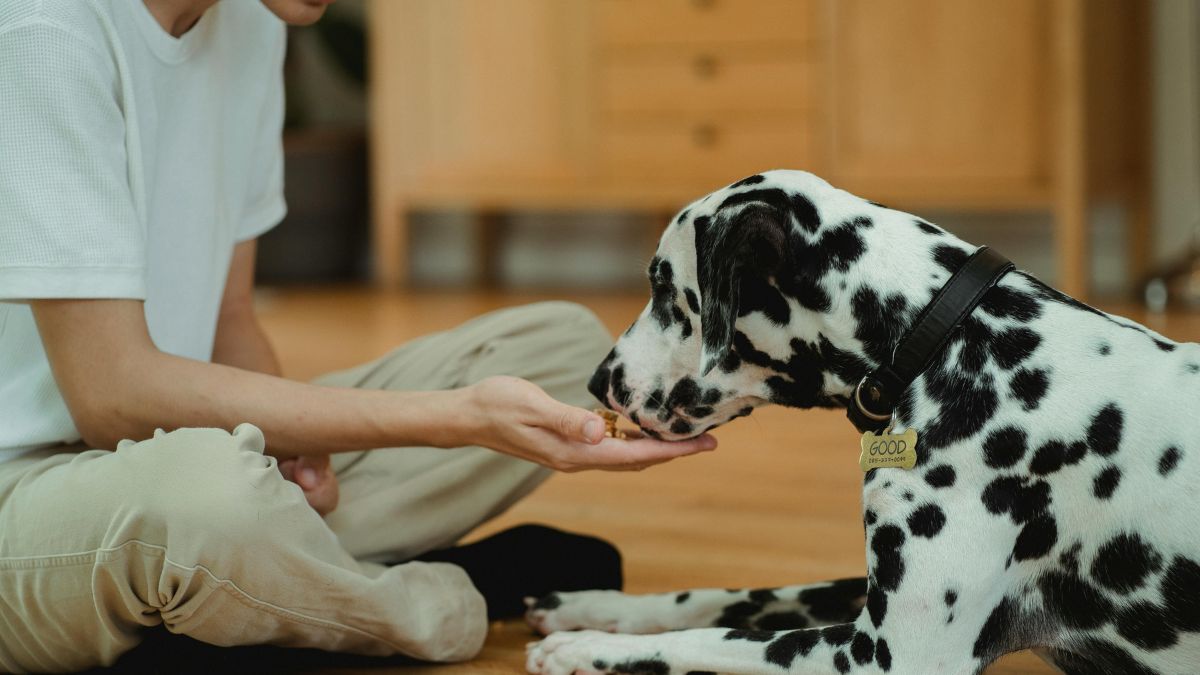
Training gets a mention here because it does something counterintuitive. Done well - no punishment, no pressure - it stops being about commands pretty quickly. It becomes more like a shared language you're both slowly building. Your dog learns that trying things with you tends to go somewhere good. You learn how your particular dog thinks, what confuses them, what excites them. I didn't expect to find that part interesting, but I do. Our guide on how to train a dog at home is worth a read if you're just starting.
There was a woman in one of my classes who'd bought a puzzle feeder, a snuffle mat, a scent training kit and a bonding journal - I'm not making that up - because she was worried her rescue dog didn't like her. What she actually needed was to sit on the floor and stop hovering. Six weeks later the dog was sleeping across her feet. She hadn't used the journal once.
Frequently Asked Questions
How do you know if a dog is bonded to you? The greeting when you walk in tells you almost nothing - every dog does that. What's more telling is the stuff that happens when nothing particular is going on. Your dog wandering over and lying down next to you for no reason. The glance back on a walk before they run off. Settling quickly and easily when you're home. Those moments, repeated consistently, are what a bond actually looks like from the outside.
What does it mean when a dog has imprinted on you? Imprinting is something that happens in the first few weeks of a puppy's life - a critical developmental window where they form their earliest and strongest social attachments. It's a specific thing, distinct from the bond that builds gradually over time with a dog of any age. When people say their dog has "imprinted" on them, they usually just mean strongly bonded, which is fine - the terminology gets used loosely.
Can a dog be bonded to more than one person? Absolutely, and most are. There tends to be one person a dog gravitates to most - usually whoever spends the most consistent time with them - but that doesn't mean the others don't matter. Dogs are capable of holding multiple genuine attachments at once. It's less like a single loyalty and more like a small network of people they trust to varying degrees.
How long does it take for a dog to bond with you? Anywhere from a week to six months, depending entirely on the dog and what they've been through. A confident puppy from a good environment might decide you're their person within days. A rescue who's had a hard time might need months of just existing safely around you before they really open up. I've seen dogs go from almost completely shut down to full velcro dog over the course of a few months - it just takes as long as it takes. Pushing for it tends to make it take longer.
Can you damage the bond with your dog? Yes. Genuine trauma, sustained unpredictability, consistently shutting down what they're trying to tell you - those things leave marks. But the question underneath this one is usually something like "I lost my temper once, have I broken it?" And the answer to that is almost certainly no. Dogs don't keep running tallies. They're oriented toward the present in a way we're not always capable of being. If you start showing up differently, they tend to update their picture of you fairly quickly.
Understand Your Dog Better with PawPaw
The more you understand what your dog is telling you, the stronger your bond becomes. PawPaw helps you get there - upload a video of your dog and get a sense of what their behavior might be telling you. The app turns everyday dog moments into fun talking-dog videos while helping you understand your companion a little better.
Because the more you understand your dog, the stronger your bond becomes. Join the waitlist and be first to try it. 🐾
This article is part of our dog behavior guide.